Social media is a place where people talk about brands, products, and their interests. And tons of posts and comments are produced every day. Then how can we track related conversation in real time to better attract customers and make informed decisions?

What is social media analytics?
Social media analytics is “the art and science of extracting valuable hidden insights from vast amounts of semi-structured and unstructured social media data to enable informed and insightful decision making.” (Gohfar F. Khan, Seven Layers of Social Media)
Why social media analytics is crucial?
Social media analytics help businesses to make better-informed decisions. Insights drawn from social conversation data might help them assess brand positioning, identify audience preferences, spot trends, and make better-informed decisions. Then how can we collect data and extract valuable insights from them?
Understanding the fundamentals of social media analytics
Step 1. Social Listening
Social listening, or in other words – social media monitoring, is a process of tracking and gathering what the audience is saying on social media. You can collect data by searching content that contains exact word phrase, hashtag or keyword.
- Voice of Customer(VoC): Voc analytics is often used to understand the customer experience or buying patterns, or manage brand reputation. Verifiable real-time VoC analysis can provide timely and insightful information about a brand or a product, and enable it to adapt quickly to ever-changing market conditions.
When conduct a social listening, it is crucial to consider the social context, as following the numbers of engagement metrics might be misleading or don’t provide useful insights. In spite of its difficulties that stem in nuance, subjectivity, and idiosyncrasies, text data can provide deeper insights as it contains meaningful information such as sentiment, trends, or customer feedback.
Step2. Text mining
The primary methods of finding information from social media is text analysis. To monitor sentiment and public perception about a brand or a product, you can start with mining text from social media posts, emails, blog posts, comments or any text-based content about the brand/product.
- Text Analysis APIs: Buy or Build? To process text mining, you don’t need to be a coding expert. There are SaaS APIs to help you with text mining, and these tools can be a good start to guide you: Google Cloud NLP, MonkeyLearn, Amazon Comprehend, Lexalytics, IBM Watson etc. Or, if you are familiar with machine-learning and want a free and customized model, you can use open-source libraries such as Scikit-learn, Scikit-learn, SpaCy , TensorFlow etc.
Step 3. Text classification and text extraction
Text classification is the process of assigning categories to unstructured text data. Most common text classifications are sentiment, topic and intent.
Text extraction is the process of obtaining specific data from unstructured data. You can extract things like keywords, prices, company names, and product specifications from text-based content.
Thanks to machine-based automation, it is possible to classify and extract texts at a large scale in a short time. There are two available solutions for the analysis of unstructured data: machine-automated NLP and machine-learning.
- Machine-automated natural language processing(NLP): this approach uses a machine to understand the human natural language. Natural Language Processing helps machines read text, by simulating humans’ ability to understand languages. Today’s NLP has developed to process a comprehensive context, decipher ambiguities, or domain-specific ontologies.
- Machine learning-based analysis: this analysis helps discover distinctive patterns from comprehensive data by training with examples. Through this analysis, the models can be altered and adjusted to adapt to new conditions that weren’t anticipated. Machine learning models can capture comprehensive context because they rely on applying patterns using probability and statistics.
For example, machine-automated approach can help you analyze the general sentiment of social media posts – whether they are positive, neutral or negative. To make this analysis even further to discover why, you may bring machine-learning analysis and find the reasons for the sentiment. For instance, you can learn whether the feedback about the product is due to customer service, product quality, price, or its packaging. However, there is still limitations; for instance, sarcasm or ironical parodies can be hard to detect or distinguish with sentiment analysis.
Step 4. Data visualization
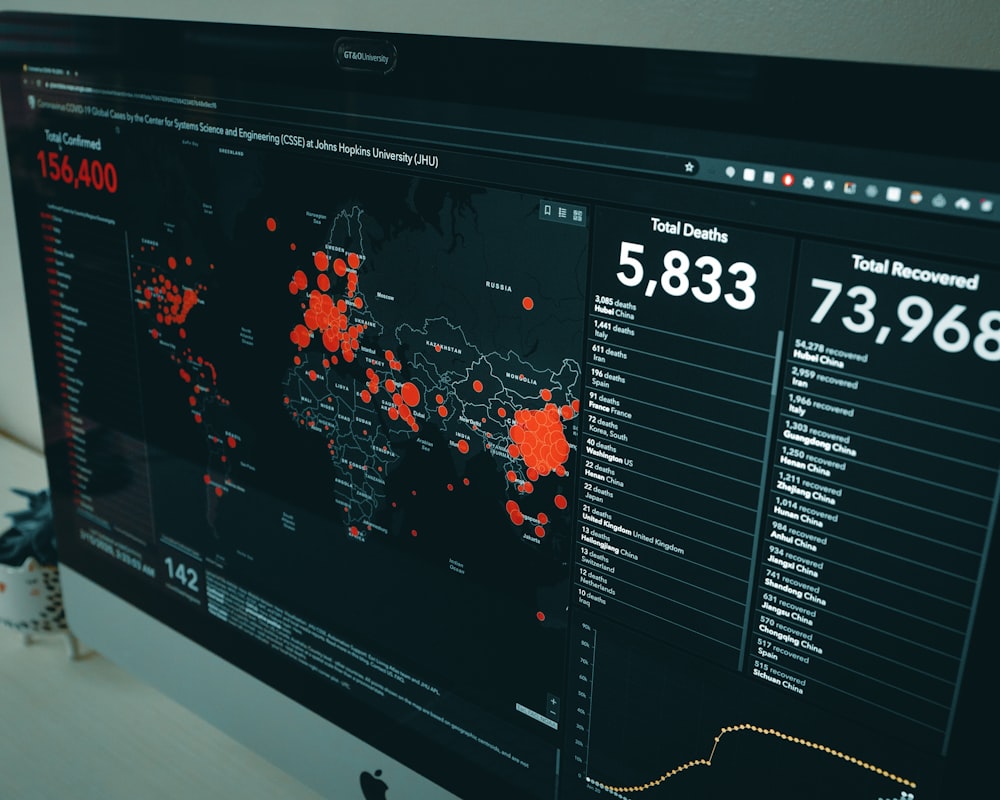
After data are collected, the data set need to be visualized so it’s easy to understand and clearly illustrate the result. Frequently used visualization tools include: Google Data Studio, Tableau, DataHero, Qlick Sense, Visme, D3.js. To visualize a set of data effectively, you should be able to choose the right visual to your purpose or goal.
There are many pieces of advice about how to make visualizations that really work. You can refer to the link below or find more information yourself. But the most important point is, you should make your visual comprehensible and straightforward. For this, it’s also a good idea to start with designing the visual with your own hands – drawing.
- How to choose the right graph & chart for your data: 44 Types of Graphs Perfect for Every Top Industry (Visme)
Step 5. Find insights and use them before its novelty wears off
Automated analysis has become a powerful tool that helps businesses gain actionable insights from their text data. One more thing: if you attained useful insights from the extracted data, it’s also important to implement data-driven strategies PROMPTLY. As data have a limited shelf-life, it’s crucial to use the insights before the values vanish.
 Ideas for Social Impact