
Zero waste becoming a social norm
Zero waste, which has recently become a global trend, originated in the early 2000s. Then, from around 2010, named influencers and US media began to focus on the zero waste Movement, stressing the importance of environment-friendly lifestyle.
For the Zero Waste Movement, the zero waste shop is a symbolic space. Zero waste shop refers to a shop that minimizes the use of packaging materials and environmental pollution while selling products or services. The idea of buying a product that has less impact on the environment is already becoming the norm. Posts related to Zero Waste are also increasingly emerging on social media. The number of users are growling who share their local zero-waist shop, know-hows and tips, or useful products.

As more people are interested in environmental issues, zero waste shops are spreading too. The number of brands that specialize in zero-waste and produce products is increasing, as more and more people – especially MZ generation, the emerging generation with purchasing power and interests in social issues – are looking for a better zero-waste brand. Or local cafés or restaurants are also jumping on the bandwagon by removing disposable plastics from their stores.

Buy as much as you just need, Zero Waste Shops
Brick-and-Mortar Zero Waste shops in South Korea
In general, single-use packaging has been widely used in retail industry. Everything we buy are all packaged in plastics and papers that are to be used once, and then be discarded. Additionally, products are being sold in bulk or the amounts per serving is packaged more than we need.
Against these practices that make wastes in product and consumption process, zero-waste shops suggest alternatives. They limit necessary packaging, adopt eco-friendly products without compromising the quality.
Still, the zero waste has just started and there is a far way to gg. With less than 10 stores in Seoul, many people may feel bothered to visit one despite the distance and inconvenience. Plastic-free or eco-friendly living is still a very difficult task, but with some stores or customers who are joining the zero waste journey, it may be possible. And here’s the list of some stores leading this drive towards better.


South Korea, Seoul, Mapo-gu, Hapjeong-dong, Woldeukeom-ro, 49
https://www.instagram.com/almangmarket/
Almang Store opened in June, 2020. The Korean word ‘Almang(알맹)’ means ‘grain’ because the store only carries contents without unnecessary packaging. Also called as a refill station, they sell oil, spices, shampoo, conditioner, body wash products, detergents and other liquid necessities per gram.
A customer can pay for the amount they only need – one bring their own containers, scoop or pour the desired amount, weigh it on the scale, and pay for the amount they need. A customer pays less than when buying a whole new one. For customers who forgot to bring their own refillable containers, the store lends sterilized containers for those who do not carry any containers. However, they do not provide delivery service.
They also sell eco-friendly products such as bamboo toothbrushes, straws made of glass and stainless steel. And they do more than selling.
They store also collects garbage that is cannot be recycled. The plastic lid, for example. The plastic lids they collect are transformed to a toothpaste squeezer. They also play a role as a local community. For example, they hold workshops and classes for local residents or those who are interested. Recently, they joined ‘Brita Attack Campaign‘, a plastic-free campaign which claims to take back and reuse a water purifier filter(Brita), and hold a recycling workshop on Brita.

13, Seoul Forest 2-gil, Seongdong-gu, Seoul, South Korea
www.instagram.com/thepicker
Located on a quaint side street in Seoul Forest, the Picker is the first zero-waste shop in Korea that opened in 2016. Started as an eco-friendly vegetarian café, the sell vegan menus – their meals and drinks do not contain cheese and eggs. Soy milk mayonnaise and almond milk are used instead. Vegan dishes include homemade Black Beans Burger, Chickpea Avocado Sandwich, and Banana Nut Open Toast.
They also sell grocery foods, grains, and vegetables. They also carry necessities you’ll need in daily routines: stainless steel, multi-use straws made of bamboo or glass, eco-bags, biodegradable floss, reusable wax wrap, natural loofahs made from dried real loofah fruit bowls made of grain, and the list goes on.

26 Hongyeon-gil, Seodaemun-gu, Seoul
www.instagram.com/bottle_factory
Bottle Factdory Of course, the café Bottle Factory does not provide single-use cups nor paper receipts. Instead, they lend a tumbler to customers who visit without a personal cup. This plastic-free cafeteria offers vegan dishes.
Also, they sell zero waste products including straws, bags, and other co-friendly supplies. Additionally, from 2018, they started package-free refill system. A customer can purchase biodegradable or e cleaning supplies such as laundry detergent and fabric softener.
They are expanding the move further. The CEO of Bottle Factory, Chung Da-woon, developed an app called “Zero Club”. People can download the app and accumulate points when they use zero-waste stores.
If you want to find more…
If you want to explore more stores in South Korea, you can visit here. The site shows a list of refill stations, plastic-free bakeries and cafés. If you are considering plastic-free living or waste reduction, visiting zero waste shops could be a good start. Not only they give you the new brand experience that might lead you deeper into the journey, but also you might find quality products unexpectedly.
Zero-Waste in Fashion
In the fashion industry, which is sensitive to trends and has to constantly come with new designs, has long struggled to get its arms around inventory. To solve this aged problem, the fashion industry is already adopting zero-waste in its deadstock inventory and unsold items.

Established in 2011 by designer Seon-ok Lim, Parts Parts is a designer brand that pursues sustainability. Representative Lim opened the PartsPARTs-lab in Buam-dong, Seoul in 2019. By using recycled materials and removing toxic chemicals generated in the production process, the brand is challenging to wastes.
Parts parts reduce wasted fabric by using only one fabric per product. It uses neoprene made of a material similar to that of a wetsuit. When attaching fabrics, the fabric bonded together using an adhesive method; the fabric is burnt and bonded without using chemicals.
North Face joined the ethical movement by introducing the ‘Eco Fleece Collection’ that recycles 1,082 million plastic bottles, through technological innovation and sincere efforts for sustainable fashion.
Finding that up to 85% of its environmental impact was coming from its own production process, they started to use recycled polyester in outdoor clothes(CountryLiving). Their eco-fleece fabric recycled 50 500ml PET bottles per jacket. Recycled materials from PET bottles were applied to over 100 styles across the entire product line, including clothing as well as shoes and supplies.

The brand also applied biodegradable materials to its products. The representative product is ‘City Eco Soul Down Jacket’. The outer and lining, threads and zippers, and the other complements are made of biodegradable materials, so that it can be completely returned to nature with 5 years of decomposition.
To reduce inventory wastes, the brand started to reform their products. Their gore-tex jackets are reproduced as coats, and men’s suits are transformed into women’s clothing. The important point here is that there is no carbon generation because the stock is reused.
Kolon Industries FnC’s outdoor brand ‘Kolo Sport’, which has been steadily continuing by expanding sustainable eco-friendly campaigns throughout the business, unveils the 7th ‘Noah Project’ in the wake of the 20FW season. The Noah Project, which has been in progress since 2016 to protect endangered animals and plants in Korea, selects one type of animal and plant each season and releases a collection.
Currently, the eco-friendly line Noah Project is applying 100% eco-friendly materials and eco-friendly techniques to all products. They use materials that are recycled from waste PET bottles, nylon, and organic cotton cultivated in eco-friendly methods.

Meanwhile, Kolon Sport plans to apply eco-friendly materials or eco-friendly construction methods to half of Kolon Sports’ products by 2023, the 50th anniversary of the brand launch. Stores are also transforming into eco-friendly stores. The brand developed biodegradable hangers and mannequins to reduce the use of plastic in stores.
In 2018, Patagonia organized the ‘Regenerative Organic Alliance’ (ROA), focusing on regenerative organic farming, which can commit to solving climate change problems. Since then, the brand has developed a high-level organic standard renewable organic certification.
They adopted a number of regenerative processes like cover cropping, intercropping(planting other crops between the ridges where one crop is planted) or compost, and absorbing carbon dioxide from the atmosphere into the ground.
Zero-waste in Vegan Beauty Industry
Many beauty brands are adopting organic, zero waste as their brand philosophy. They ban animal testing, avoid chemical substances and plastic packaging, and share know-hows and tips on sustainable action to protect earth.
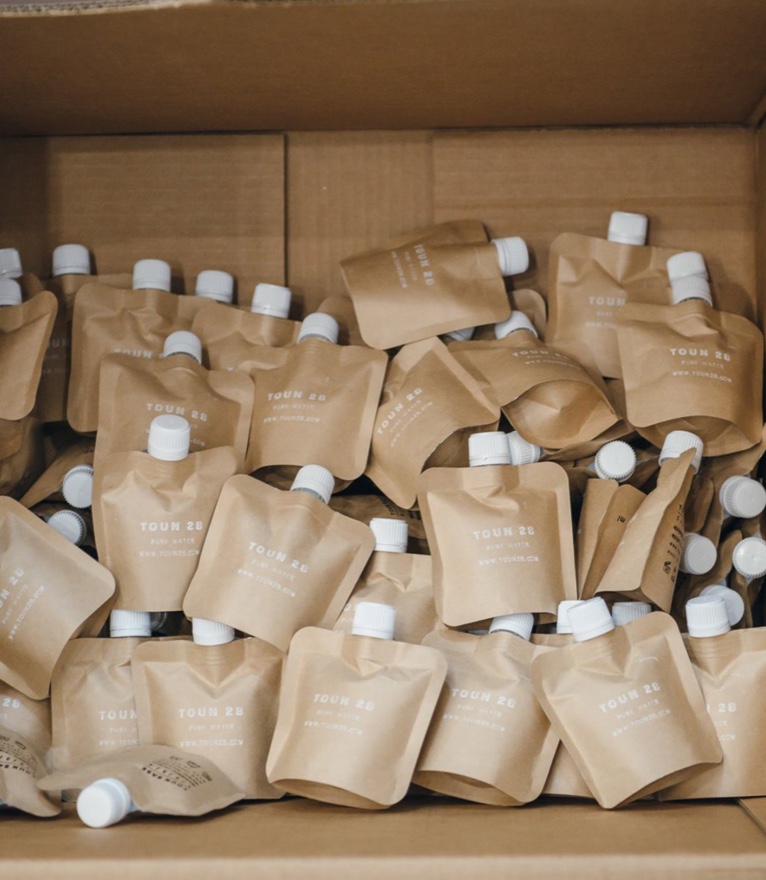
With the slogan of acting for the environment, TOUN28 is striving to minimize the use of plastic by stably containing cosmetic ingredients in recyclable paper packages that have been tested more than 500 times. They act against animal testing too. Their vegan products do not use animal or animal-derived ingredients, including meat, fish, honey, eggs, and dairy products, and are crafted from plant-based ingredients.
They developed a biodegradable paper container for cosmetic to reduce plastic waste. They also succeeded to develop the world first recycle-labelling paper package. They are still on the journey to make a 100%-biodegradable paper container with no plastic cap.

Aromatica is a vegan and cruelty-free brand that creates efficacious formulas. The products are produced sustainably and are free of synthetic fragrances. Aromatica ensures that its products have the least possible impact on the environment. Their brand mission clearly states “Save The Skin, Save The Planet.”
For packaging, the brand uses recycled glass and post-consumer recycled(PCR) plastic. The brand continuously improves upon the packaging to make it more sustainable. To keep up with its eco-friendly approach, the brand even discarded the use of pump applicators made of polyethylene(PE), polypropylene(PP) plastic and metal springs. Instead, they have switched to using PP flip caps that are easier to recycle.
Why is Zero Waste Movement spreading?
Zero waste movement and branding
As mentioned above, zero waste or eco-friendly moves are nothing new. However, as MZ generations emerged as a new purchasing power, sustainability and ethical consumption has become a new standard. And the growing demands are changing the game, turning over the conventional production and consumption process in ways to minimize the negative impact on the environment.
Increasing numbers of companies are actively recycling resources to capture the MZ generation that pursues ‘value consumption’ such as purchasing eco-friendly products. They publicly support and advocate what they value. the majority of Generation Z(54 percent) state that they are willing to spend an incremental 10 percent or more on sustainable products(Forbes). New York University Center for Sustainable Business(CSB) reaffirms this shift. According to November 2019 Fortune story, CSB found 50 percent of sales growth among consumer packaged goods (CPG) between 2013 and 2018 came from sustainability-marketed products, despite the fact such goods account for just under 17 percent of the market.
Sustainability: A key strategy to brand survival and grwoth
Plastic free challenges that have swept the social media also indicates how many young people are interested in environment issues. Vegan craze and eco-fur consumption share the same context. Pursuing sustainability is no longer niche. With this changes, many brands hopped on the bandwagon of zero waste. Now, sustainability has become a vital element for survival for many brands.
 Ideas for Social Impact